
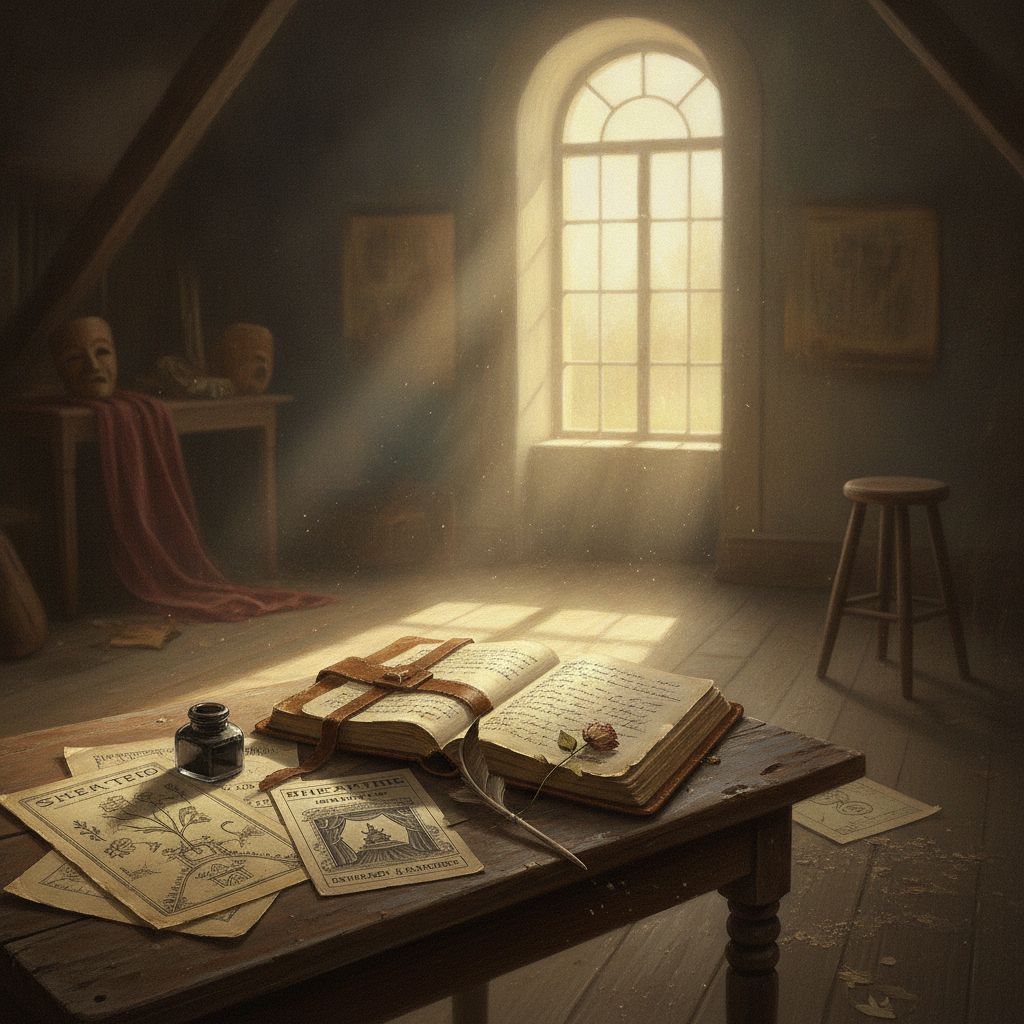
The Secrets Within Hannah’s Diary
The stage lights dimmed as a hush fell over the audience at the small theater in the heart of South Carolina. It was the annual performance of “Hannah’s Trials,” a play that had captivated the local community for years. The tale was woven from the diary of Hannah Climena Pixley, a woman whose life story had both scandalized and inspired the Ariail family—and by extension, the region that knew them well.
Hannah’s diary was more than just a collection of her private thoughts; it was an unflinching record of her tumultuous life with her husband, Stokes Smith Ariail, a man both loved and cursed by his kin. His bouts with substance abuse were no secret, and they cast a long shadow over the family’s otherwise proud lineage. In her diary, Hannah had chronicled the daily struggle with courage and candor that belied her times.
The curtains rose, revealing Hannah standing under the imagined moonlight, pen in hand, her face a mask of both determination and despair. Her story unfolded through the words she had penned by flickering candlelight, each entry a beacon of resilience.
“February 17, 1867,” she began, her voice clear and steady, resonating through the theater. “Tonight, Stokes returned home well past midnight, his footsteps heavy with the smell of whiskey. I found him in the parlor, asleep in the armchair, his face softened by the shadows. How I wish these moments of peace could last when he awakes. Perhaps tomorrow will be different.”
The audience was transported back to that Victorian era, their hearts caught in the pensive web of Hannah’s words. The actors moving around her brought to life the domestic battles that were simultaneously ordinary and epic in their emotional intensity. Each line she delivered was a testament to endurance, peppered with hope that flickered but never fully extinguished.
As the plot thickened, it revealed more than just the struggles with Stokes’s demons. It was also a portrait of a woman ahead of her time, navigating societal expectations, motherhood, and personal integrity. The diary entries became monologues, and through them, Hannah’s voice resonated with a clarity that had been silenced by the passage of time.
Midway through the performance, Hannah’s character paused to reflect, capturing the turning point of her narrative. “April 12, 1872: Today, I walked to the old willow by the river, seeking solace beneath its canopy. There, I vowed to find moments of joy, however fleeting, and carve out a sanctuary for my children, where laughter could echo without fear. They must know love, untouched by the shadows of their father’s choices.”
The play, like the diary, was a journey—one of sorrow, strength, and ultimately, redemption. Hannah’s words were an invitation for the audience to witness her resilience, and perhaps find fragments of their own untold stories within hers. When the final curtain fell, it did so with a poignant silence, as if the echoes of Hannah’s trials still lingered in the air.
For the Ariail family, Hannah’s diary was far more than mere history; it was a living dialogue with the past, reminding each generation that courage often lay not in grand gestures but in the quiet resolve to persevere through life’s tempests. It was this legacy that the family historian, and now Keith Ariail, the guardian of their stories, vowed to protect.
The audience rose in applause, honoring not just the play but the truth it brought to light—a truth that nestled in the pages of an old diary, penned by the unassuming but indomitable hand of Hannah Climena Pixley.