
The Legacy of the Ariail Acreage: From Soldier to Steward
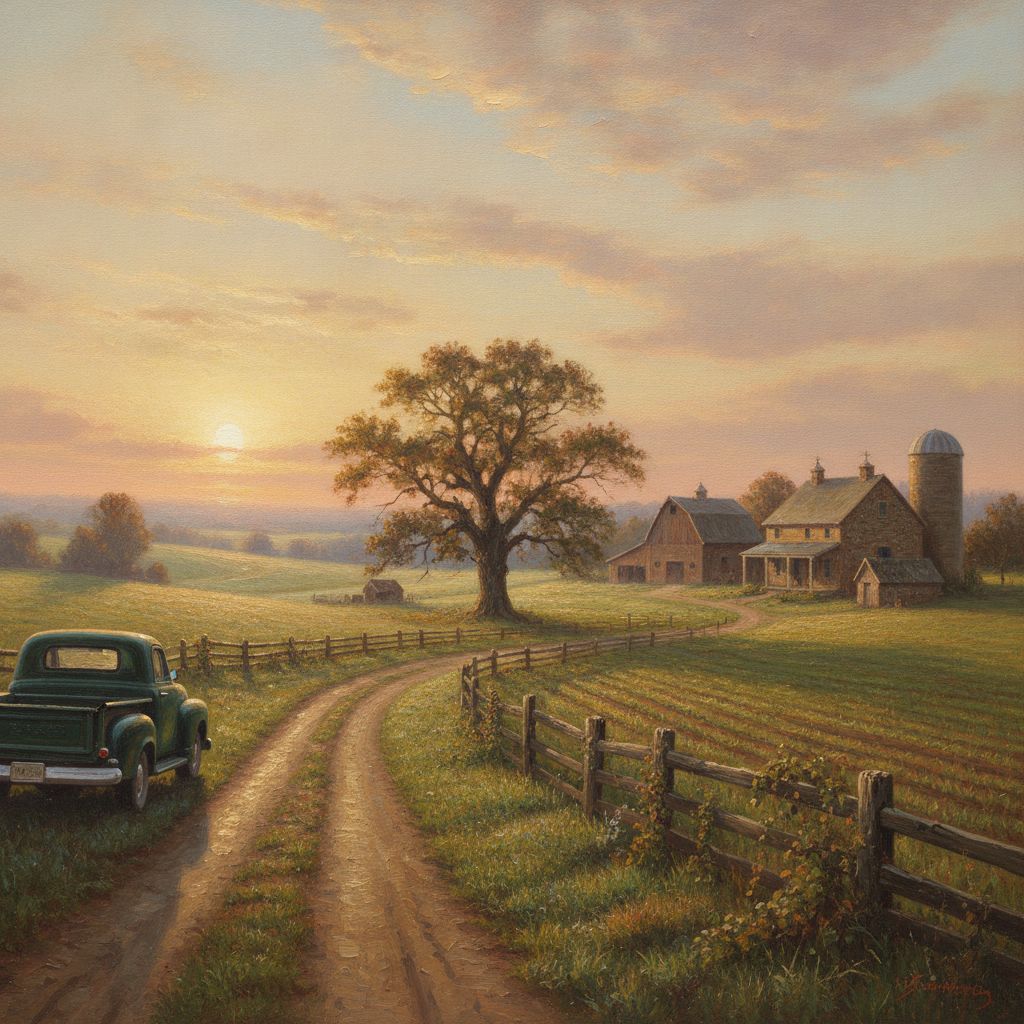
The sun was just a golden sliver above the horizon when Mark Ariail stepped out of his truck and into the dewy embrace of the family farm. The fields stretched ahead like an unbroken sea, promising another day of hard work and bounty. Yet, as Mark inhaled the crisp morning air, he knew the land beneath his feet was more than just soil—it was the foundation of a legacy that began with a dream forged centuries ago.
In 1785, Richard Bellamy, Mark’s ancestor, stood on this very soil and made a decision that would shape the destiny of his kin. A former Continental Army soldier, Bellamy was drawn to the promise of new beginnings, purchasing 287.5 acres of untamed land. Here, amid the whispering pines of South Carolina, he began to sow the seeds of what would become the Ariail family farm.
Richard’s vision was simple yet profound. With his family’s own hands, they erected a log home—a sturdy sanctuary amidst the wilderness. The fields blossomed under their care, offering grain, corn, hay, and cotton, essential for their survival. Yet, the true seeds he planted were those of resilience, resourcefulness, and the unyielding spirit of independence that defined his lineage.
When Richard passed away in 1815, his will was a map to the future, entrusted to his descendants. The farm, its equipment, and even the slaves bought to work the land were passed down, binding each generation to the one before it through shared toil and triumph. This symbiotic relationship with the land became a touchstone for the Ariails, a constant through the ebbs and flows of history.
Fast forward to the present, and the farm remains a thriving testament to Richard’s legacy. Yet, the past was not only chronicled in the furrows and fields; it was also intimately etched into the pages of a remarkable document—the handwritten journal of Manna Rich Ariail, a descendant whose chronicles provided a bridge through time.
This journal, revered within the family and held by the Ariail Family Reunion Association, spanned roughly 200 pages, meticulously outlining Manna’s business ventures that stretched from Louisiana to the broader United States. It contained letters to his sisters, Delia and Sabra Maty, revealing the personal interplay that wove its way through their business dealings and everyday lives.
Through the journal, the family uncovered stories of fires and fortunes, deep losses, and triumphs. It recorded the Civil War’s harsh imprint upon the land and the resilience with which the Ariail family emerged in its aftermath. Each page echoed a time when decisions were made not with the sweep of a pen but with the heart, echoing the steadfast perseverance first sown by Richard Bellamy himself.
As Mark walked the rows of the field that morning, the weight of history felt light upon his shoulders. He was a steward of both earth and narrative, ensuring that stories unspoken were not forgotten but flourished alongside the crops. When he broke ground, he could feel the rhythm of Bellamy’s shovel, and in the wind’s rustle, he heard the whispers of Manna’s journal.
The farm was indeed more than a piece of land; it was a living chronicle—a place where past, present, and future converged. It was a nod to the spirit of exploration and the pursuit of an enduring dream, set into motion over two centuries ago. In every sunrise that bathed the fields in gold, the Ariails found the promise of another day and the renewal of a legacy steeped in the rich tapestry of their ancestral soil.