
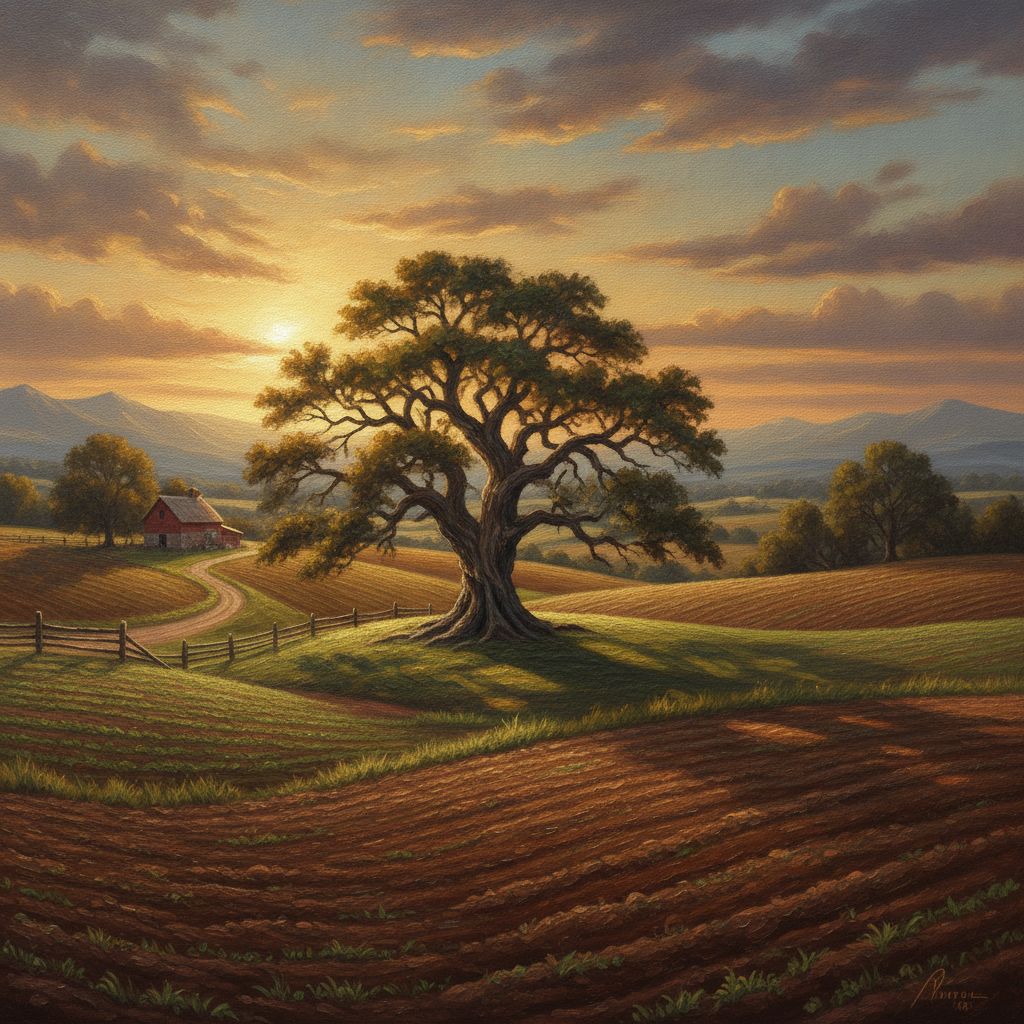
Generations of Soil: The Ariail Legacy
In the heart of western Franklin County, Georgia, lies a patch of land that, on the face of it, might seem just another piece of bucolic farmland. But this land, spread across more than 600 acres, holds within its soil the stories of two centuries, carrying the echoes of the Ariail family’s journey from South Carolina in pursuit of new beginnings.
William Harrison Ariail was a man driven by the call of the land. In the early 1800s, he uprooted his life in South Carolina, where prosperity was marked not only by wealth but by the weight of familial expectations and unspoken tensions. South Carolina was the cradle of his family’s legacy, but it was also where shadows of disputes over land and inheritance loomed large following the death of his mother, Chloe.
Chloe Ariail had been the quiet matriarch, her presence grounding the family even as the complications of inheritance began to fray their bonds. Her death left not just a void but a question—a question of who would carry forward the legacy and how. In the whispering of leaves and the murmurs of the wind, William heard an answer.
Georgia beckoned with its promise of uncharted prosperity and land as fertile and rich as his hopes. In a bold move, he took his inheritance—financial and perhaps a portion of his mother’s holdings—and ventured into Franklin County. Here, he established a sprawling farm near the Nails Creek Community, each acre a testament to his determination to cultivate both the earth and new family ties.
The Ariail farm flourished, standing resilient and robust against the tides of time. Over 200 years later, it remains not just a plot of earth but a living canvas of the Ariail story, recognized by the U.S. Department of Agriculture as a beacon of familial dedication. The fields, tilled by countless hands of Ariail descendants, echo with the laughter, hopes, and dreams of generations.
Meanwhile, across the tapestry of time and land, another story unfolds. Anna Little Tabor, a retired schoolteacher, sits on the porch of her family home, gazing out at the fields that her great-great-grandfather, James Little, had received in 1784 as recompense for his Revolutionary War service. This land grant was more than a reward; it was a root, anchoring future generations to a shared past, echoing the Ariail experience.
As the sun dips below the horizon, casting long shadows over the verdant expanse, one can almost hear the whispers of William and James sharing tales of perseverance. They were men who understood the language of land and legacy, and through the toil of their hands and the sweat of their brows, they forged stories that survive in the soil.
Today, the fields are quiet but not silent. They are alive with history, with every furrow and ridge bearing witness to a family’s resilience and a legacy’s enduring spirit. For the Ariails, as for the Littles, land is not merely property—it is an heirloom, a story told over generations, a testament to enduring roots grown deep in the Southern soil.