Whispers Among the Stones: A South Carolina Legacy
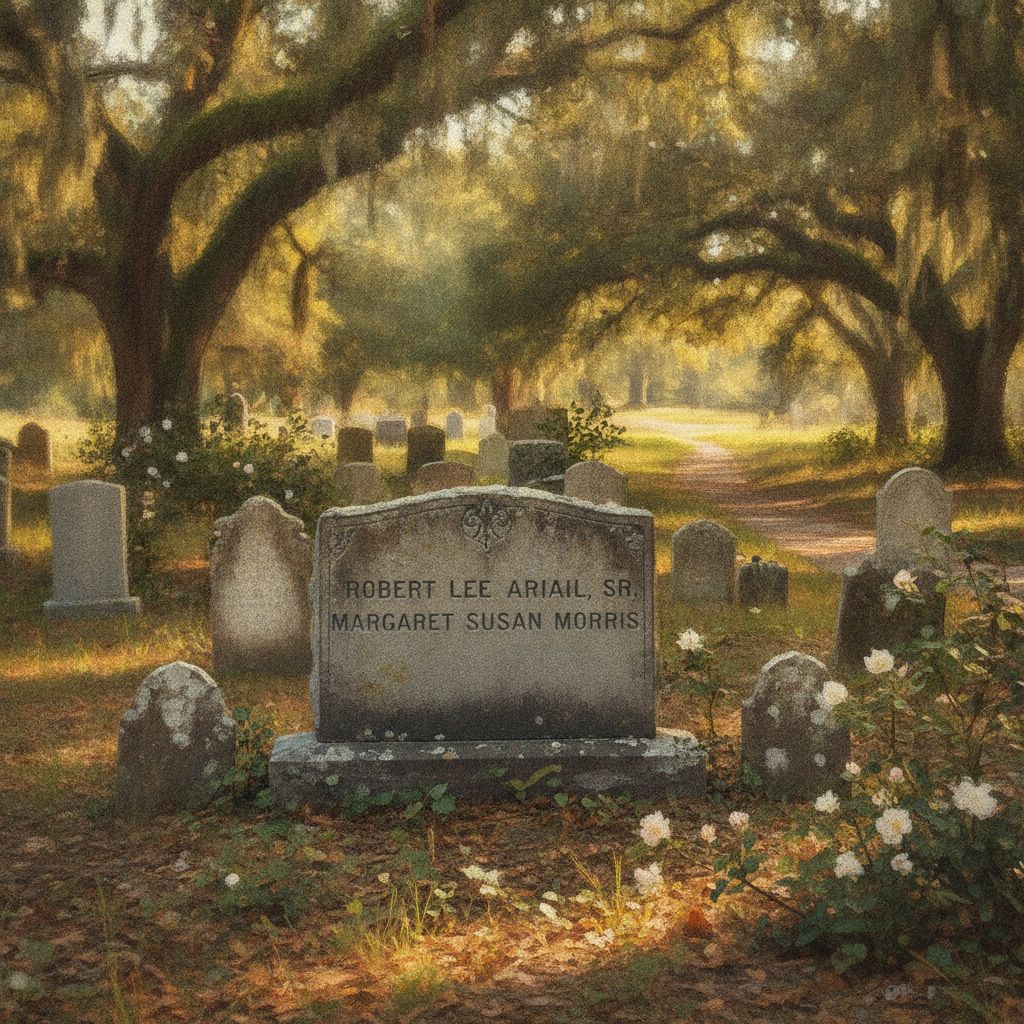
In the stillness of Willington’s churchyard, a gentle breeze rustled the leaves, carrying whispers of the past. Here lay Robert Lee Ariail, Sr., beneath a timeworn gravestone shared with his beloved wife, Margaret Susan Morris. Their resting place, marked by a simple yet dignified stone, told stories not just of their lives, but of a family’s enduring legacy.
Robert Lee Ariail, Sr., with a life embedded deep in the soils of South Carolina, had roots that reached back to Albert Harrison Ariail, his father. The Ariail name stretched across generations, like the robust branches of a family tree, interwoven with tales of triumph, faith, and resilience.
Not far away, in Columbia’s Elmwood Cemetery, another chapter of this tale unfolded. Here, Rev. James Warren Ariail and his wife, Caroline Emma Hodges, slept beneath the shaded canopy of history. James, son of Luke Ives Ariail, was a man of the cloth, his life dedicated to guiding others through the spiritual labyrinths of their lives. His gravestone, a solemn testament to a life devoted to faith, was a beacon for many who wandered through these hallowed grounds, seeking solace or inspiration.
Every stone carried a memory; every etched letter was a reminder of connections—some tender, others tumultuous, but all significant. Yet, another story awaited, woven into the lush landscape near Easley. At the Carmel Presbyterian Church cemetery, the grave of Climelia Abigail Ariail lay silent, though her life’s echoes resonated through the generations she touched.
Climelia, alongside her husband, had been a cornerstone of her community—a matron of warmth and wisdom, dispensing both with equal measure. Her descendants, united by her legacy, had come together over the years to ensure that the resting places of their forebears did not fade into obscurity. It was this collective effort that spoke volumes about the Ariails’ commitment to remembrance and reverence.
As the sun dipped below the horizon, a golden hue cast itself over these stones, each a silent sentinel watching over the stories it held. Families, friends, and strangers alike passed by, some pausing to breathe in the history, others merely wandering by, unaware of the narratives beneath their feet.
For the Ariail family, these graves were not merely markers of death, but celebrations of life’s continuum—a tapestry woven with love, diligence, and faith. They were a testament to the strength of family ties that, despite the inevitability of time, refused to unravel.
And there, amid the whispers of the breeze and the soft rustle of leaves, the Ariails continued to speak, their stories lingering among the stones for those who paused long enough to listen.