The Ariail Navigators: From World’s Edge to Will’s End
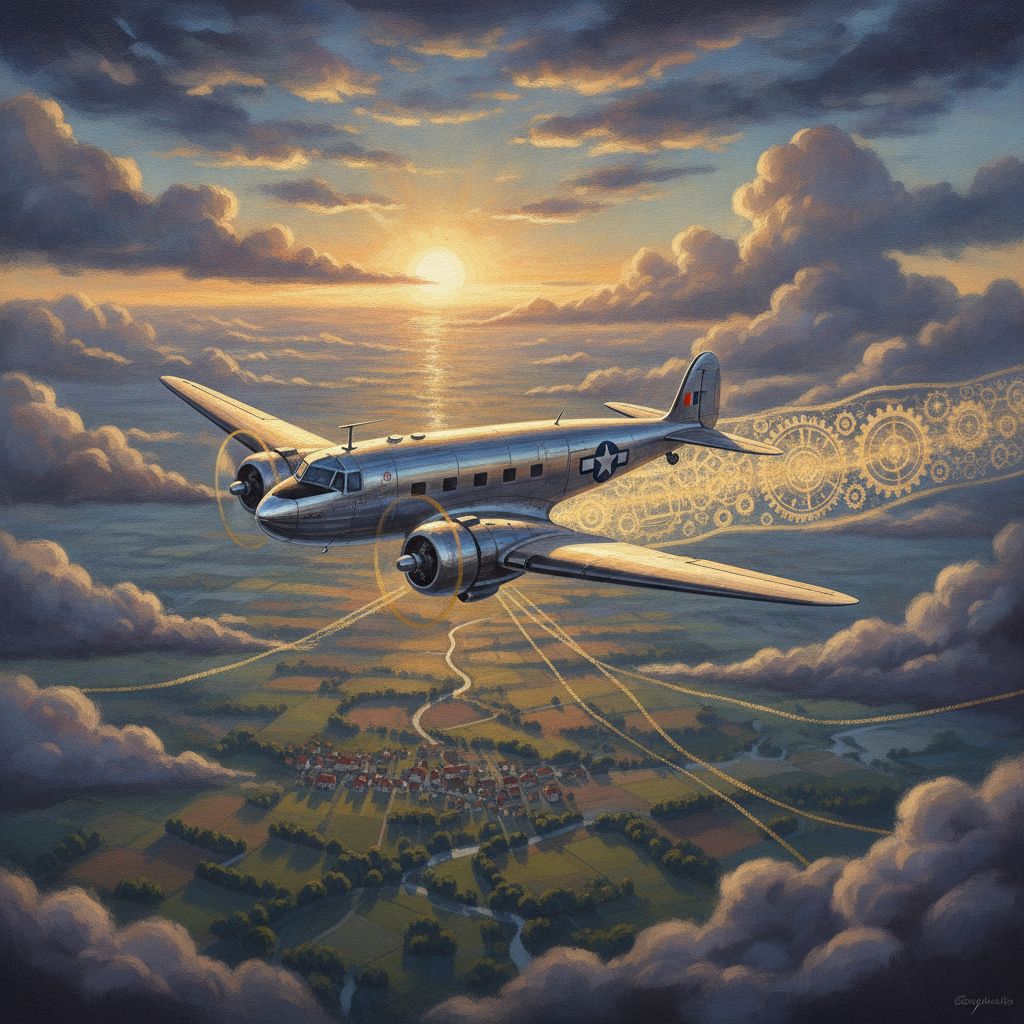
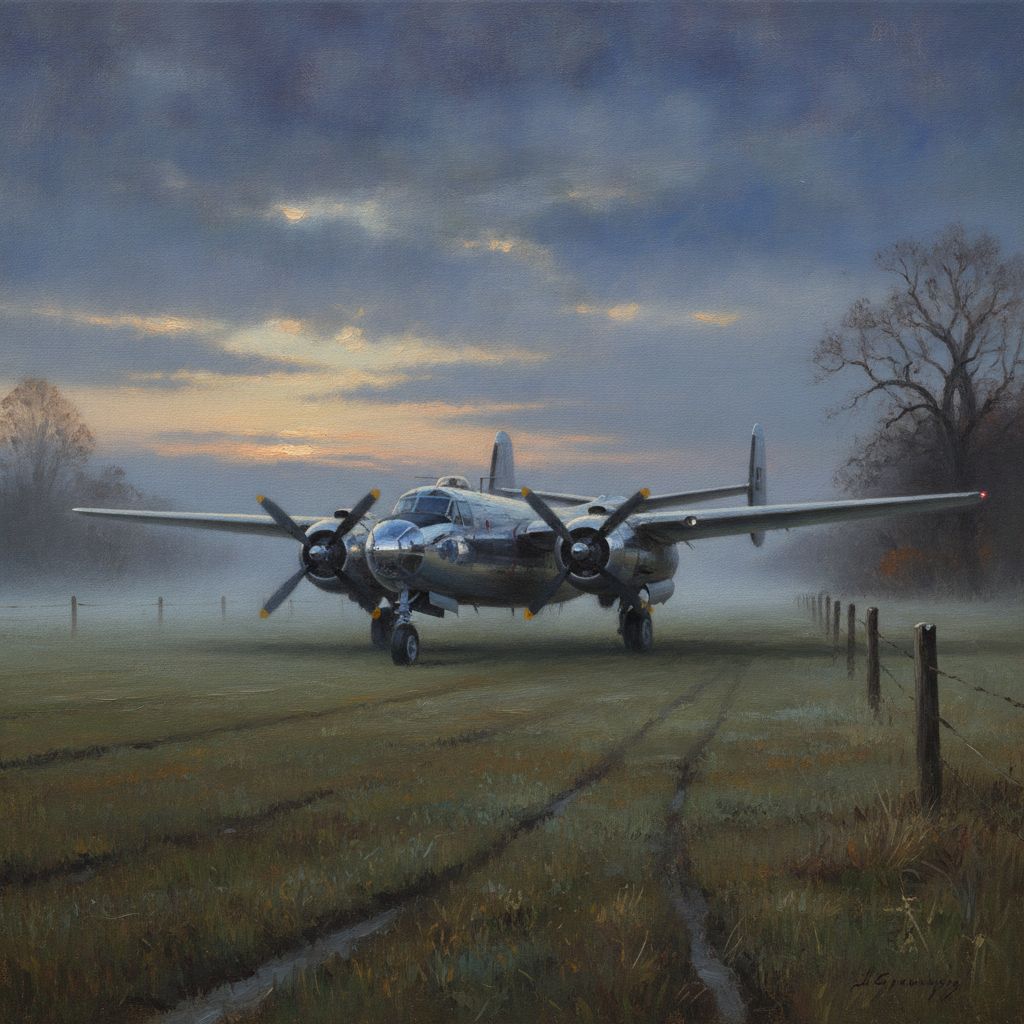
It was the dawn of a new world, yet the sun had not even climbed over the horizon on November 25, 1945. An unusual gathering stood tense and ready at the airstrip in Savannah, Georgia. There, beneath the chilly morning sky, a sleek Douglas A-26 Invader awaited her daring crew. This was no ordinary flight—this was a journey to stretch the very boundaries of possibility.
Lt. Col. Otto H. Schumacher took a deep breath, the gravity of the mission thrumming through him as he adjusted his navigator’s headset. Beside him, Col. Joseph R. “Randy” Holzapple was already visualizing the path they would carve through the skies, his focus steely and unwavering. Lt. Col. Charles R. Meyers, the co-pilot, exchanged a nod, while Corporal Howard J. Walden, their radio operator, tapped the transmitter to assure its readiness. They would need every resource at their disposal; they were about to fly around the world in just four days.
As the engines roared and the plane lifted from the ground, a sense of both destiny and history weighed upon them. This was not just a demonstration of military might; it was a testament to human ingenuity and a tribute to all the silent travelers whose paths were never charted in the annals of aeronautic glory.
Meanwhile, across the decades and the shifting sands of memory, another journey was unfolding, inscribed not in the skies but in the heart’s ledger. Sabra Maty Ariail, born in Connecticut to Luke Ariail, was a woman of rare spirit and determination. Her journeys were not about speed or conquest but about legacy and kinship. In the early 1800s, Sabra traveled from her family home in Connecticut to distant lands, where the warmth of familial hospitality awaited among her cousins in Georgia and South Carolina.
Sabra’s most arduous journey came upon the death of her uncle, Manna Rich Ariail, in Louisiana. She trekked through rolling hills and across rivers to gather signatures from distant relatives, ensuring that his will could be properly probated. Her travels took her to Massachusetts, where she once lived, and again on those dusty paths to visit her kin. Each step was a thread woven into the vast fabric of her family’s legacy.
Both Otto H. Schumacher and Sabra Maty Ariail, separated by time and purpose, were navigators in their own right. Otto charted a course across oceans and continents, a beacon of the modern age’s promise. Sabra, with each signature procured, upheld the bonds that keep families intertwined through generations, a testament to relationships that time and distance could never sever.
As Otto’s journey concluded with a triumphant return to Washington, D.C., proving the incredible reach of American aviation, Sabra’s documented travels through Georgia and South Carolina bore witness to the softer, enduring strength of familial connection. Both stories, varied in their scope and ambition, echo through the halls of the Ariail history, each telling of travels that shaped the family and the world in which they lived.