
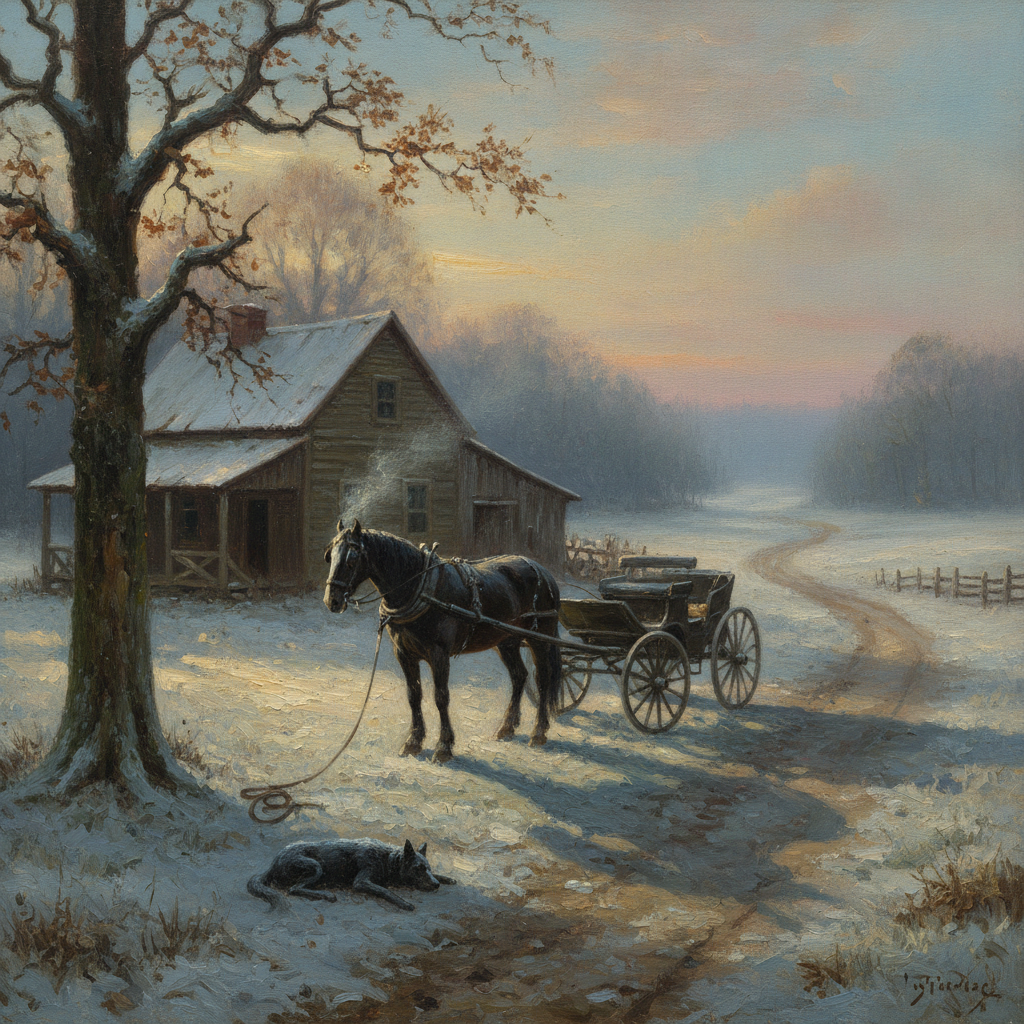
The Case of the Dead Dog: A Tale of Misadventure and Revenge
It was a crisp winter morning on January 14, 1897, in Easley, South Carolina, a date not readily forgotten by Will Ariail. The sun hung low in the sky, casting long shadows over the frosty ground as Will hitched his trusted horse to the carriage, ready for a day of business in town. Little did he know, fate had a rather unexpected misadventure in store.
The roads to Easley were familiar to Will; a route well-traveled and lined with friendly faces and nodding greetings. His horse, steady and reliable, pulled the carriage with an unhurried grace. But as they clipped along, the peace of the morning was shattered. From the side of the road, a rogue canine darted into view—a dog, barking wildly, its eyes filled with mischief or perhaps merely the thrill of the chase.
The horse’s reaction was immediate and violent. With a start, it reared back, the buggy lurching dangerously. Will, unprepared for the sudden chaos, was thrown from his seat, tumbling to the ground in a flurry of limbs and expletives. His world spun as he landed on the hard earth, the breath knocked ruthlessly from his chest.
As dust settled, so did the horse, which, shaken but uninjured, sidled to a stop a few yards away. The dog, having completed its self-appointed task, loped off with a gleeful bark, perhaps recounting its victory over the startled horse and its hapless driver.
Will, bruised and sore but fueled by a growing sense of indignation, gathered himself up. His pride wounded more than his body, he surveyed the scene of his recent misfortune. It was then, as he brushed the dirt from his clothes and winced at the forming bruises, that a steely resolve set in. Enough was enough.
Returning home later that day, Will’s mind churned over the event. The dog had become the symbol of an affront to his dignity, a four-legged bandit demanding retribution. Taking action with a determination born of both irritation and a touch of humor at the absurdity of it all, Will retrieved his shotgun.
A short time later, the dog—now notorious in Will’s mind—met its fate. This act, a testament to both the seriousness with which affronts were treated and the small-town folklore of justice, became known as “The Case of the Dead Dog.”
In days to come, the story spread through the town, told and retold at gatherings and in whispers over fences. It spoke not just of a dog’s ill-timed lark, but of a man determined to restore his honor. It was a tale rich with the humor of everyday life, a reminder of the unexpected events that color the tapestry of existence.
And thus, within the Ariail family archives, this story endures—a peculiar chapter among many, filled with laughter, resilience, and the unfailing human spirit, ever ready to turn misadventure into legend.