
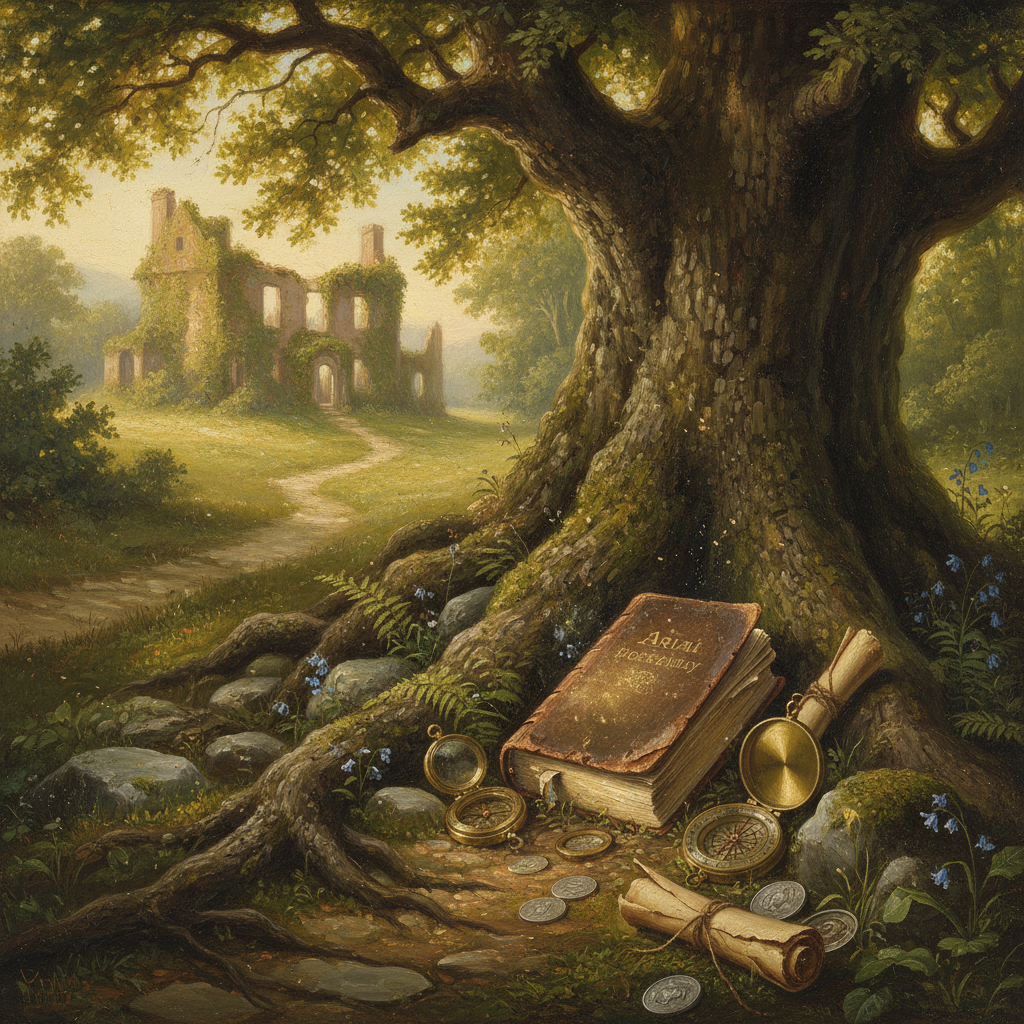
The Lost Legacy of the Ariail Family Bible
In a dimly lit attic strewn with dust-covered boxes and forgotten relics, a discovery awaited that would unravel the unspoken legacy of the Ariail family. The air was thick with anticipation as Julia Ariail, the youngest family historian, carefully opened a weathered chest marked with the initials “M.R.A.” Her heart raced with every creak of the ancient hinges, as if they were whispering secrets from the past.
Julia’s fingers brushed against the soft leather of an old, meticulously preserved family Bible. An artifact bearing the name “Manna Rich Ariail,” this heirloom had been handed down silently through generations, until the whispers of its existence reached Julia’s inquisitive ears. With reverence, she opened the cover, the scent of aged pages mingling with dust motes dancing in the slanted sunlight.
Inside, the Bible revealed an unexpected bounty: handwritten notes in the margins, dates chronicling births and deaths, and cryptic annotations alongside familiar biblical passages. Yet, it was a small, folded piece of parchment tucked within the book that truly caught Julia’s attention. It seemed an unassuming addition, yet its presence felt intentional, almost urgent.
Unfolding the delicate parchment, Julia discovered a carefully penned letter addressed to “The Future Generations of the Ariail Family.” Her eyes widened as she read aloud, feeling the weight of history resonate in her voice. The letter spoke of a family mystery—a hidden legacy buried somewhere within the family’s ancestral lands in Louisiana, awaiting the right moment and the right person to uncover it.
The author, Manna Rich Ariail himself, detailed cryptic clues interwoven with the family’s history: tales of war-torn landscapes and lost treasures, whispers of a significant event that had slipped through the cracks of conventional storytelling. It was as if Manna had anticipated future generations seeking answers to questions they never asked.
Intrigued by this newfound purpose, Julia embarked on a journey spanning across states—from dusty parish libraries in Louisiana to the quietude of forgotten cemeteries. She sought answers in every gravestone inscription, every archived newspaper article, and conversed with distant relatives who still lived on once-thriving family plantations.
At the heart of her quest lay an unexpected revelation: Manna’s legacy was more than a hidden treasure; it was a testament to resilience and unity. She learned of ancestors who had weathered war and hardship, who had quietly yet profoundly impacted the communities they touched. These unsung heroes had woven a tapestry of courage and perseverance, each thread telling a unique story of hope and redemption.
In her quest, Julia not only unearthed a treasure but revitalized a sense of identity and pride within the Ariail family. She became the torchbearer of Manna’s intentions, reminding her family of their shared history and the enduring values that had sustained them through generations. The lost legacy had been rediscovered, not as a solitary prize, but as a collective triumph that transcended time.
As Julia closed the family Bible and returned it to its revered place in the attic, she felt the weight of responsibility lift from her shoulders. Manna’s voice, once a distant whisper, now resonated within her, echoing through the annals of family lore. And with each story she shared, Julia breathed life into the forgotten pages, ensuring that the Ariail legacy would endure, cherished by the generations yet to come.