The Mysterious Stranger Who Dined with the Ariails
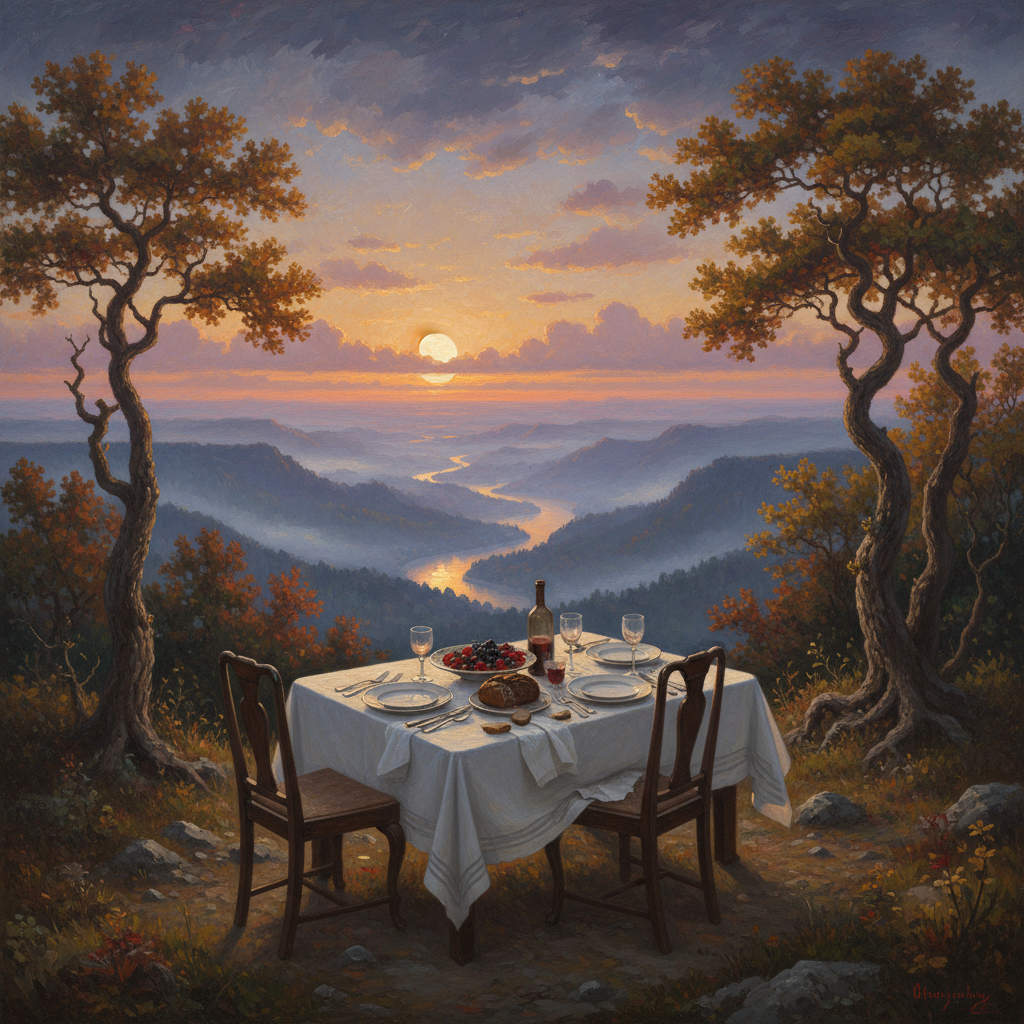
It was a brisk, chilly evening in November, 1897. The wind howled through the tree branches that adorned the path leading to the Ariail family home nestled on the outskirts of town. Inside the candlelit dining room, the mood was far warmer than the tempestuous weather outside. The family was gathered around the antique mahogany table, their eyes gleaming from both the flickering candlelight and the anticipation of the sumptuous meal that lay before them.
Yet, this wasn’t just any typical Ariail family dinner. Seated at the very end of the table was a guest—a mysterious stranger whose story would linger in the family’s lore for generations. Clad in a well-tailored overcoat and a hat that shadowed his features until he removed it, revealing a striking face framed by dark, wavy hair, the stranger introduced himself simply as “Mr. Wetherbee.”
Mr. Wetherbee had appeared at dusk, seeking shelter from the storm that had begun to rage with fervor. Though initially hesitant, the hospitality that the Ariails were renowned for prevailed. After all, it was the custom in those days to offer kindness to weary travelers.
“Thank you, sir,” Wetherbee had said with a nod of appreciation to the family patriarch, Thomas Ariail. His voice was smooth yet carried an unusual accent—a whisper of foreign lands that was both captivating and unsettling.
As the evening unfolded, the stranger mesmerized the family with tales of his travels. He spoke of bustling markets in far-off countries, of deserts that stretched beyond the horizon, and of skies painted with unfamiliar stars. His words painted vivid pictures, each one more intriguing than the last, and for the children, it was as if an entire atlas had come alive at their dinner table.
Yet, there was one tale that struck a chord deeper than any other. Mr. Wetherbee recounted a story of a small, forgotten village nestled in the valley of the Swiss Alps—a place where time seemed to pause, and where he had witnessed what he called “the miracle of the snowdrops.” He described how, one winter, when the village was buried under a relentless blizzard, a patch of snowdrops blossomed overnight, untouched by the icy grasp that held the rest of the land in thrall.
“It was a sign,” he declared, his eyes scanning the faces of his captivated audience, “that beauty, even the smallest of wonders, can thrive in the harshest conditions.” He paused, letting the weight of his words settle like snowflakes on the listeners’ furrowed brows.
As the evening drew to a close and the storm outside abated, Mr. Wetherbee prepared to take his leave. The family watched as he buttoned his overcoat and positioned his hat back upon his head, shrouding his features once more in mystery. Despite their curiosity, they had learned nothing of his origins or destination, for he had deftly steered the conversations away from himself throughout the night.
“Thank you for your hospitality, Mr. Ariail,” he said as he stepped out into the now still night, a full moon casting an ethereal glow upon the landscape. “Perhaps one day our paths will cross again.” With that enigmatic farewell, he vanished into the lingering mist that danced across the fields, leaving the Ariail family to ponder the evening’s events.
The Ariails never saw Mr. Wetherbee again, nor did they uncover the truth about his identity. Yet, his visit became a cherished anecdote, recounted with as much wonder and speculation as the tales he had shared. It was a story passed down with the Ariail name, a reminder that sometimes, the most memorable characters in our lives are those who enter and exit with the fleeting brilliance of a comet, leaving only tales and echoes in their wake.
And so, the mystery of the stranger who dined with the Ariails remained unsolved, a puzzle piece from a much grander design—hinting, perhaps, at the endless stories hidden within the tapestries of family history.